Most parents don’t think about cleaning their pram until something goes wrong — a visible stain, a musty smell, or wheels that barely roll. By that point, the pram has been accumulating dirt, bacteria, food residue, and mould for months. Here’s how to tell when your pram needs a clean, what happens if you leave it, and how often you should actually be doing it.
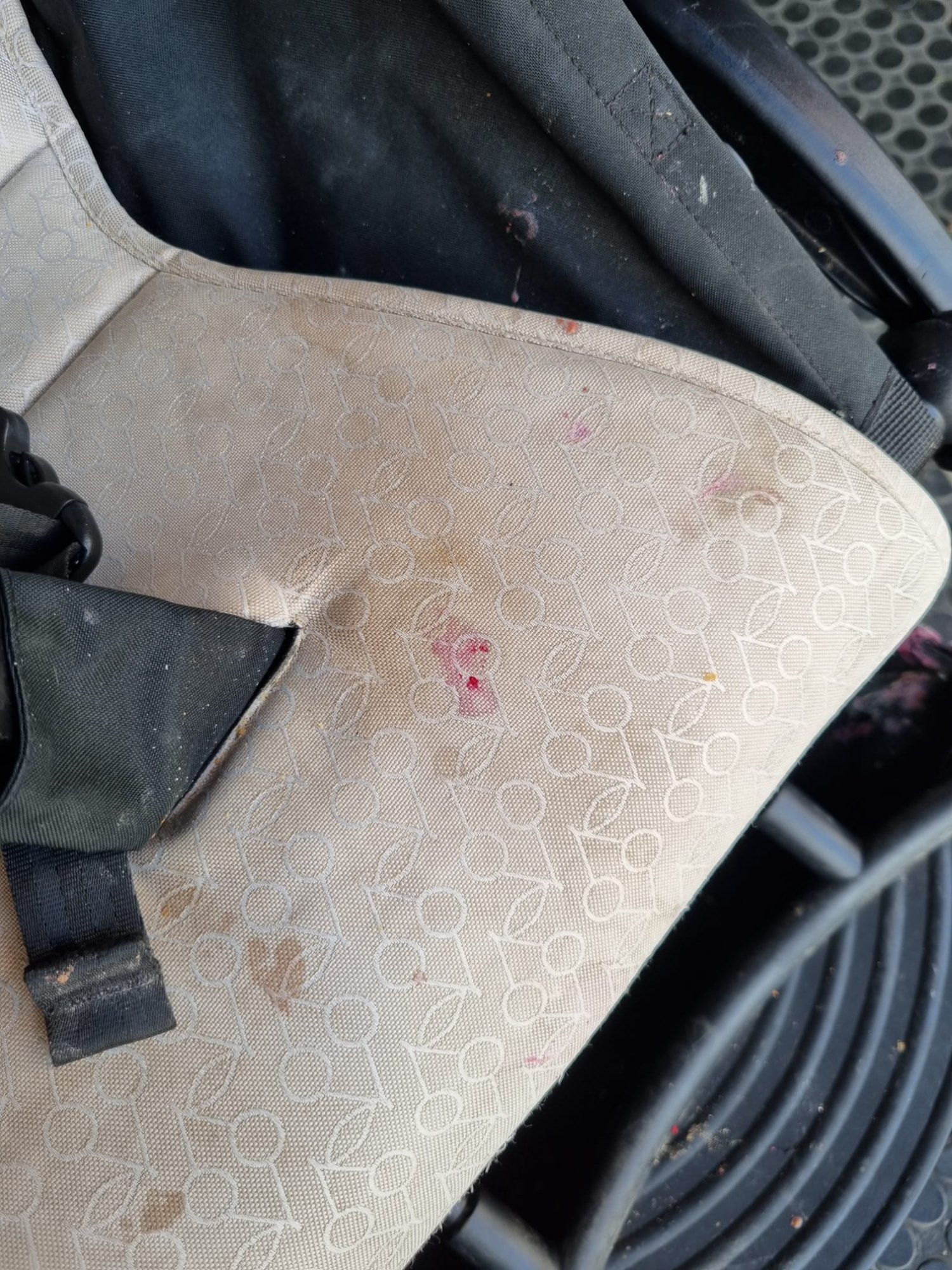
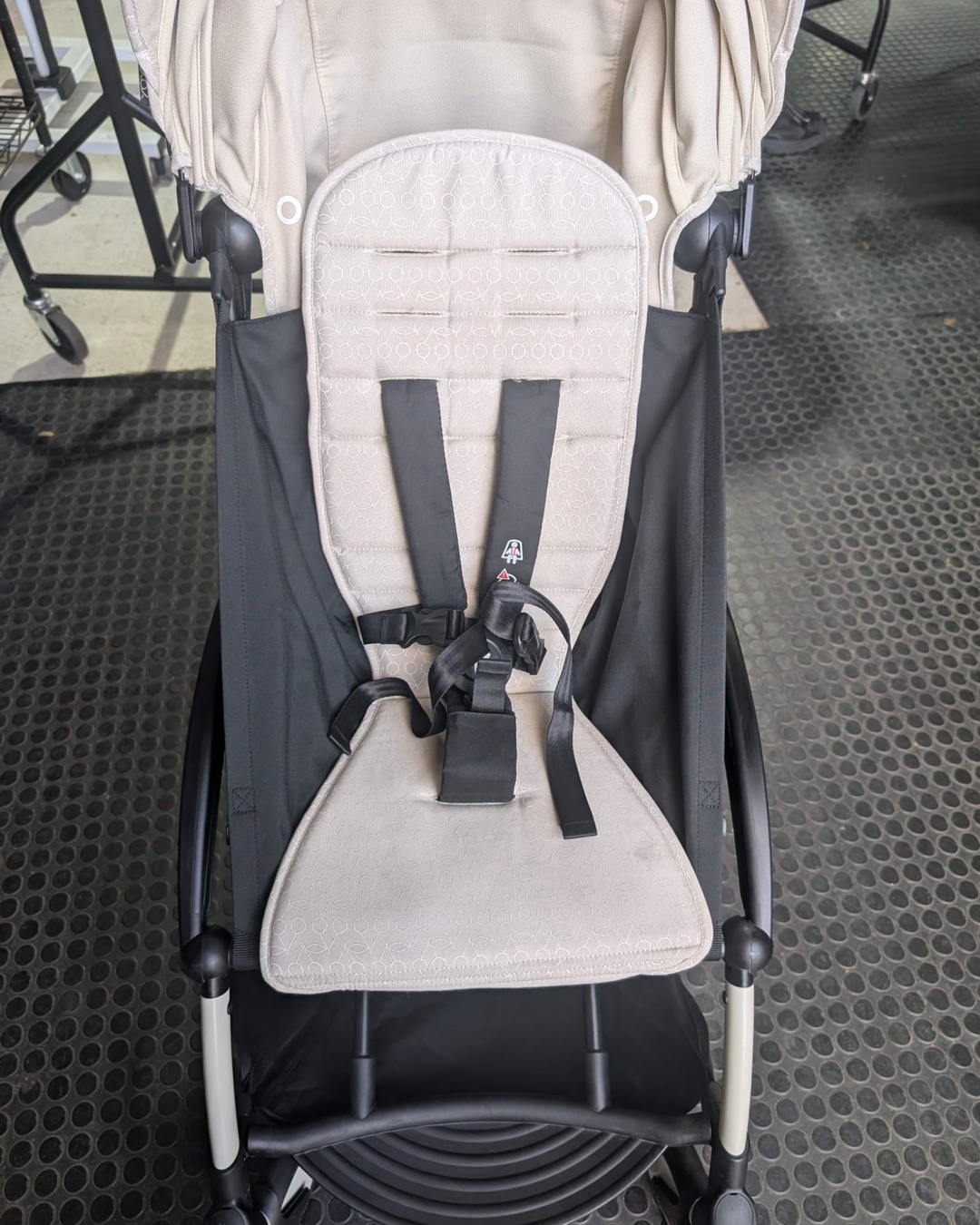
A real before and after from one of our recent cleans. The stains, food marks, and general grubbiness were all removed with baby-safe products.
The visible signs your pram needs cleaning
You probably already know your pram is dirty. But parents often normalise how bad it’s got because the decline is gradual. Here’s what to look for:
- Stains on the seat fabric. Milk, food, juice, mud — if you can see marks on the fabric, there’s more you can’t see that’s soaked into the padding underneath.
- Sticky patches. Run your hand along the bumper bar, harness buckle, and seat edges. If anything feels sticky or tacky, it’s a buildup of food, drink, and hand residue.
- Darkening of light-coloured fabric. Light grey or cream fabrics gradually turn darker from general use. You stop noticing because it happens slowly. Compare the seat colour to a hidden area like under the harness pad — the difference will surprise you.
- Black spots on the hood or seat. This is mould. It usually starts in the hood lining or on the back of the seat where moisture gets trapped. If you spot this, it needs dealing with before it spreads. Read our guide on mould removal.
- Wheels that don’t roll properly. Hair, thread, and grit wrapped around the axles. The pram pulls to one side or feels heavy to push.
- A crumb-filled crevice around the seat. Fold back the seat fabric where it meets the frame. If there’s a layer of crumbs, dust, and mystery debris — that’s been there for months.
The hidden signs you can’t see
The visible stuff is only half the problem. What’s lurking inside the padding and foam is worse:
- Bacteria in the foam padding. When milk or food soaks through the fabric cover, it gets absorbed by the padding underneath. You can wash the cover, but the foam retains everything — and you can’t put foam in a washing machine.
- Dust mites. Fabric seats in warm environments (like your hallway or car boot) are prime dust mite territory. Your child sits with their face inches from this surface.
- Dried bodily fluids. Drool, spit-up, sweat, and the occasional nappy leak. These dry and become invisible but the bacteria remain.
- Mould in the hood lining. The hood traps moisture, especially after rain or if the pram is stored before it’s fully dry. Mould can grow inside the hood lining without being visible from the outside.
How often should you clean your pram?
There’s no single answer because it depends on how often you use it and what your child does in it. But here’s a sensible framework:
- Quick wipe-down: weekly. Wipe the seat fabric, bumper bar, and harness with a damp cloth. Takes 2 minutes. This prevents buildup.
- Wheel clean: monthly. Cut hair from axles, wipe the wheels. 5 minutes. This keeps the pram rolling smoothly.
- Full fabric wash: every 3–6 months. Remove the covers and machine wash per manufacturer instructions. This is the minimum for maintaining hygiene.
- Professional deep clean: every 6–12 months. A full strip-down, including the foam padding, harness, shell, and hood interior. This is the only way to clean what’s absorbed into the padding. Also recommended after any vomit or nappy incident, before a new baby uses the pram, or before selling.
What happens if you don’t clean your pram?
Nothing dramatic in the short term. Your pram won’t break. But over time:
- Stains set permanently. Fresh stains are easy to remove. Stains that have been baked in by sun and heat for months are much harder — sometimes impossible without professional equipment.
- Mould spreads. A small mould spot in the hood becomes a colony that spreads to the seat. Mould in foam padding is a health concern for young children. See our mould guide for more on this.
- Resale value drops. A well-maintained Bugaboo or UPPAbaby holds its value. A stained, musty one sells for £100–200 less. A £75 professional clean before selling often returns 3–4x in resale value.
- The harness and buckle become unreliable. Sticky, crumb-jammed buckles don’t release smoothly. This is a genuine safety concern in an emergency.
Cleaning between babies
Reusing a pram for a second child is smart. But pulling it out of storage after 12–18 months and putting a newborn in it without cleaning is not ideal. Storage attracts dust mites, the foam absorbs moisture and develops musty smells, and any residue from your first child has been sitting there the whole time.
At minimum: wash all fabric covers, vacuum the frame, bicarbonate of soda the seat padding, clean the wheels, and air everything in sunlight. For complete peace of mind, a professional clean eliminates everything — bacteria, dust mites, mould, odours. Worth it for the surface your newborn will spend hours against every day.
Think your pram might be overdue?
Our professional pram cleaning service handles every brand. Full strip-down, baby-safe deep clean, and free collection and delivery across London. From £75.
Book a Pram Clean