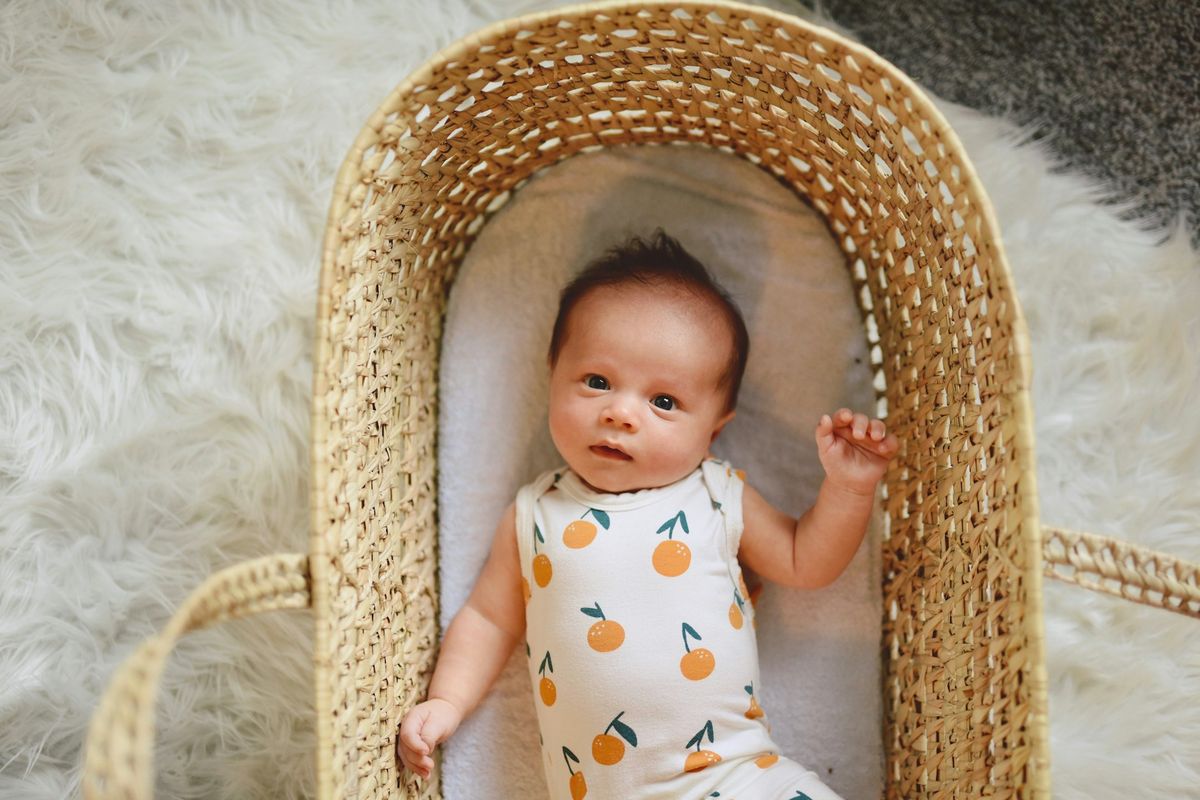
Moses baskets are one of the most popular sleeping options for newborns in the UK — and for good reason. They are lightweight, portable, and create a snug, enclosed space that helps babies feel secure during those first few months. But if you are a new parent, or expecting, you have probably asked: are moses baskets actually safe?
The short answer is yes — when used correctly. Both the NHS and The Lullaby Trust recommend moses baskets as a safe sleep option for newborns. But there are important safety guidelines to follow, a point where your baby needs to move on to a cot, and — something that rarely gets talked about — real hygiene risks that can affect your baby's health if the basket is not properly cleaned.
Are moses baskets safe for newborns?
Yes. Moses baskets are specifically designed for newborn sleep and are recommended by the NHS as a safe alternative to a cot or crib in the early months. The key is that the basket provides a firm, flat sleeping surface in a clear space — the same principles that apply to any safe infant sleep environment.
Moses baskets actually have several advantages for newborn safety. The compact, enclosed shape helps prevent your baby from rolling into unsafe positions. The lightweight, portable design means you can keep your baby in the same room as you during the day and at night — which the NHS recommends for the first six months to reduce the risk of Sudden Infant Death Syndrome (SIDS). And because they sit at a low height, even if placed on a stand, the risk of serious injury from a fall is lower than with a raised cot.
The basket itself is not the risk. The risks come from how it is used — and that is where the safety guidelines come in.
Essential moses basket safety guidelines
These are based on current NHS and Lullaby Trust guidance:
- Always place your baby on their back to sleep. This is the single most important thing you can do to reduce SIDS risk, regardless of whether they sleep in a moses basket, cot, or crib.
- Use a firm, flat mattress. Your baby's head should not sink into the mattress by more than a few millimetres. If it does, the mattress is too soft. Never add extra padding, pillows, or sleep positioners.
- Keep the sleep space clear. No toys, bumpers, pillows, or loose blankets in the basket. Use a baby sleeping bag or a cellular cotton blanket tucked in firmly below the shoulders.
- Place feet to foot. Position your baby with their feet touching the bottom of the basket. This prevents them wriggling down under bedding.
- Same room as you. For the first six months, your baby should sleep in the same room as you — day and night. A moses basket makes this easy because you can move it from room to room.
- Keep away from heat sources. No radiators, heaters, fireplaces, or direct sunlight near the basket. Overheating is a risk factor for SIDS.
- Place on a flat, stable surface. If using a moses basket stand, make sure it is sturdy and designed for your specific basket. Never place the basket on a bed, sofa, or any elevated surface where it could tip.
- Never carry the basket with your baby in it. Despite the handles, moses baskets are not designed to be used as carriers while the baby is inside.
When to stop using a moses basket
There is no single age at which you must stop — it depends on your baby's weight and development. The general guidance is:
- Weight limit: 9kg. Most moses baskets have a maximum weight capacity of 9kg. Once your baby reaches this weight, the basket's structure may not safely support them.
- Rolling over. Once your baby can roll independently, they need to move to a cot. A moses basket does not have the space or structural depth to safely contain a rolling baby.
- Pushing up. If your baby is pushing up on their hands, they are strong enough to potentially tip the basket or pull themselves over the side.
For most babies, this transition happens somewhere between 3 and 6 months — but every baby develops differently. Watch for the signs rather than going by age alone.
When the time comes, transition gradually. Try short naps in the cot first, keep the cot in your room, and maintain the same bedtime routine. Most babies adjust within a few days.
Are second-hand moses baskets safe?
Many parents buy or borrow second-hand moses baskets — they are expensive new, babies use them for only a few months, and they are one of the most commonly passed-on pieces of baby gear. Using a second-hand basket is fine, but there are important checks to make before your baby sleeps in it.
Always buy a new mattress. The Lullaby Trust recommends using a new mattress for each baby. Second-hand mattresses may have lost their firmness, and can harbour bacteria, mould spores, and allergens that are not visible on the surface. A replacement moses basket mattress costs around £10–15 — it is not worth skipping.
Check the structure. Inspect the basket carefully for cracks in the weave, loose or broken wicker, fraying, and any damage to the handles or base. If the basket has been stored in a loft, shed, or garage, check for mould — especially on the underside and around the base where moisture collects.
Check the stand. If it comes with a stand, test the stability. Wobble it, apply pressure to the sides, check the locking mechanism. A stand that has been folded and stored for years may have weakened joints.
Wash everything. Remove all fabric liners, covers, and bedding and wash at 30–40°C. Wipe the basket itself with a damp cloth and mild baby-safe detergent. Allow to dry completely — not near a radiator, but in a well-ventilated room. Damp wicker grows mould fast.
Hygiene: the risk nobody talks about
Most moses basket safety advice focuses on sleep position, mattress firmness, and SIDS prevention — and rightly so. But there is another risk that gets far less attention: hygiene.
Moses baskets are made from natural materials — palm leaves, wicker, maize, or cotton yarn. These materials are breathable and lightweight, which is good for your baby. But they are also porous, which means they absorb moisture, milk, sweat, and other organic matter over time. And once moisture gets into woven fibres, it creates conditions for mould, bacteria, and dust mites to thrive.
This is particularly relevant if you are:
- Using a basket that has been in storage. Lofts, garages, and sheds are damp environments. Even a basket that looked clean when it was packed away can develop mould after months or years in storage. The mould may not be visible on the surface — it can grow inside the weave and underneath the base.
- Using a second-hand basket. You do not know how the previous family stored it, what was spilled in it, or whether it was dried properly after cleaning.
- Using a basket through a second or third baby. By the time a basket reaches its second child, it has absorbed months of milk residue, saliva, sweat, and general use. Even with regular cleaning, the woven structure traps organic matter that a surface wipe cannot reach.
Mould spores in particular are a concern for newborns. Babies have immature immune systems and airways that are far more sensitive than adults. Inhaling mould spores can irritate the respiratory tract and may trigger allergic reactions. If you can see mould on a moses basket — or if it smells musty — it needs a thorough deep clean before a baby sleeps in it. If the mould is extensive or has penetrated deep into the weave, it is safer to replace the basket entirely.
How to clean a moses basket
For a routine clean between uses or before a new baby:
- Remove all fabric liners, covers, and bedding. Machine wash at 30°C with a mild, baby-safe detergent.
- Vacuum the basket thoroughly with a brush attachment — get into the crevices of the weave where dust and debris collect.
- Wipe the entire basket with a damp cloth and mild soapy water. Do not soak it — wicker and palm are damaged by excessive water.
- For mould, use a solution of one part white vinegar to four parts water. Apply with a cloth, scrub gently, then wipe clean with plain water.
- Dry completely in a well-ventilated room. This is critical — if the basket is not fully dry before use, you are creating the conditions for mould to return.
- Replace the mattress. Always. Even if the old one looks fine.
For a basket that has been in long-term storage or is heavily soiled, a professional clean is worth considering. The woven structure of a moses basket makes it difficult to clean thoroughly at home — you can wipe the surface, but you cannot easily reach the organic matter trapped deep in the weave. A professional service can strip it down, deep clean every component, and ensure it is hygienically safe for your baby.
Need your moses basket cleaned before baby arrives?
We professionally deep clean moses baskets, Next to Me cribs, and all baby sleep items using baby-safe products. Collection and delivery across London. From £45.
Book Moses Basket CleanFrequently asked questions
Are moses baskets safe for newborns to sleep in?
Yes. The NHS and The Lullaby Trust both recommend moses baskets as a safe sleep option for newborns. The basket should have a firm, flat mattress, no loose bedding, and the baby should always be placed on their back. Use the basket in the same room as you for the first six months.
How long can a baby sleep in a moses basket?
Until they reach 9kg in weight or start rolling over independently, whichever comes first. This is typically around 4 to 6 months old, though every baby develops at a different pace.
Is it safe to use a second-hand moses basket?
Yes, provided you buy a new mattress, check the basket for structural damage (cracks, loose weave, broken handles), and clean it thoroughly before use. The Lullaby Trust recommends using a new mattress for each baby.
Can mould on a moses basket harm my baby?
Mould produces spores that can irritate a baby's airways and trigger respiratory issues. If you find mould on a moses basket, it needs to be cleaned thoroughly with a vinegar solution and dried completely. If the mould is extensive or has penetrated the weave, replace the basket.
Can you machine wash a moses basket?
No — the woven basket itself should never be machine washed or soaked in water. The fabric liners and covers can usually be machine washed at 30°C. The basket should be wiped with a damp cloth and dried thoroughly.
Do I need to buy a new mattress for a moses basket?
The Lullaby Trust recommends a new mattress for each baby. Second-hand mattresses may have lost their firmness and can harbour bacteria and mould that are not visible. A replacement costs around £10–15.